ANCIENT LEGEND OR MODERN MYTH: Claims About Solomon’s Tomb Spark Global Debate
A sensational claim is rapidly spreading across social media, declaring that the tomb of King Solomon has been opened after 7,000 years, revealing discoveries so shocking that they have stunned the world.
The story is captivating.
An ancient king known for wisdom and wealth.
A hidden tomb lost to time.
A modern discovery that promises to rewrite history.
It is the kind of narrative that instantly captures imagination.
But as the claim gains traction, historians and archaeologists are urging caution.
Because the reality behind such stories is often far more grounded than the headlines suggest.
According to historical and biblical accounts, King Solomon ruled the Kingdom of Israel around the 10th century BCE, making the timeline of “7,000 years” immediately questionable.
This discrepancy alone raises concerns about the accuracy of the claim.
If the timeline does not align with established historical understanding, the rest of the narrative must be examined even more carefully.
The question of Solomon’s tomb has long been a subject of speculation.
Ancient texts suggest that he was buried in the City of David, an area of immense archaeological interest near modern-day Jerusalem.
However, no definitive tomb attributed to him has ever been conclusively identified.
Excavations in the region have uncovered numerous artifacts and structures.
But none that can be definitively linked to King Solomon himself.
Archaeology is a meticulous discipline.
Discoveries are documented.
Analyzed.
Peer-reviewed.
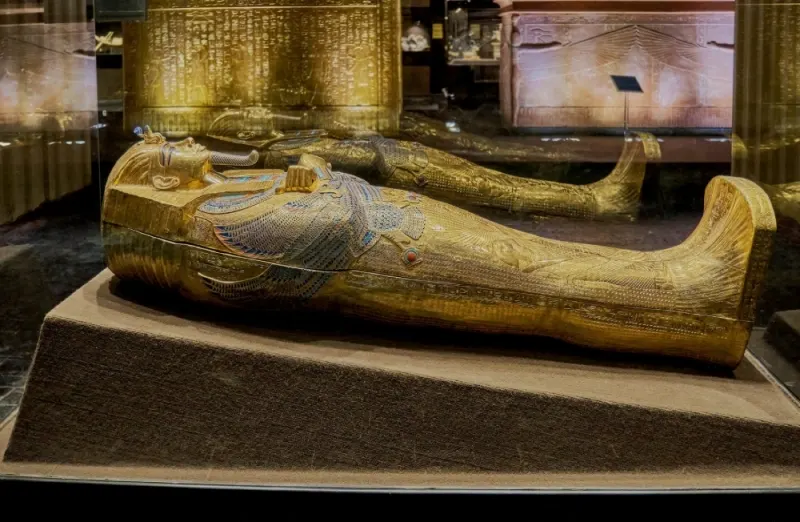
Major findings are typically announced through academic publications and widely covered by reputable media outlets.
A discovery as significant as the confirmed tomb of Solomon would not emerge quietly through viral posts.
It would be one of the most important archaeological breakthroughs in modern history.
The absence of such confirmation is a critical detail.
Yet the story continues to spread.
Driven by dramatic language and the allure of ancient mystery.
Phrases like “everyone was stunned” create a sense of urgency and certainty.
Even when the underlying evidence is unclear or nonexistent.
This pattern is not new.
Stories involving legendary figures often attract attention.
Especially when combined with claims of hidden treasures or lost knowledge.
They tap into a deep curiosity about the past.
A desire to uncover secrets that have remained buried for centuries.
But that curiosity can also make audiences more susceptible to exaggerated or misleading claims.
Experts emphasize that while many aspects of ancient history remain uncertain, extraordinary claims require extraordinary evidence.
Without verifiable data, documented excavation reports, or confirmation from recognized institutions, such stories remain speculative.
This does not diminish the importance of ongoing research.
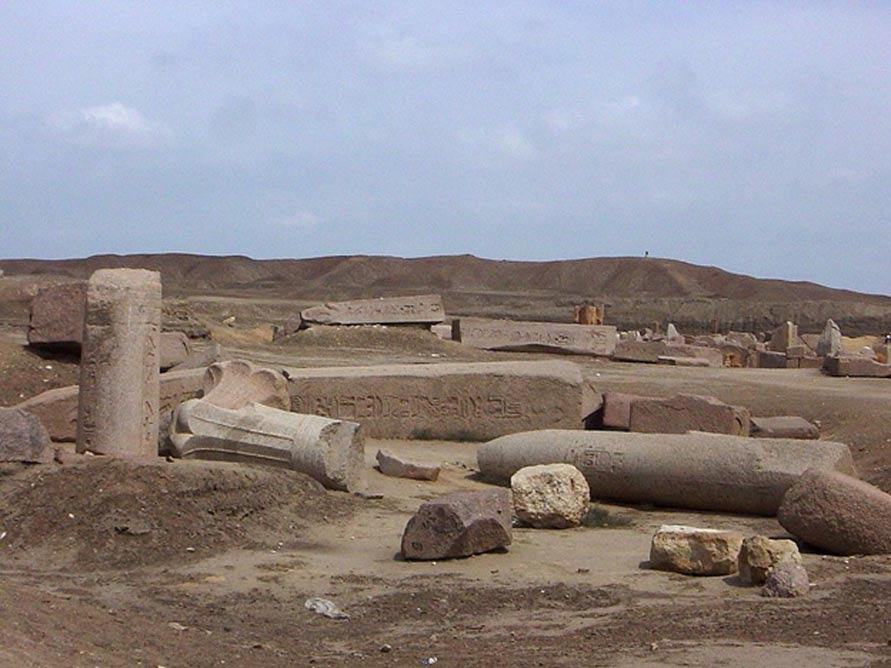
Archaeologists continue to explore sites connected to ancient Israel.
Uncovering insights into daily life, culture, and governance during the time traditionally associated with King Solomon.
These discoveries, though less sensational, contribute meaningfully to our understanding of history.
They build knowledge piece by piece.
Rather than through sudden, dramatic revelations.
The viral claim also reflects a broader phenomenon in the digital age.
Where historical narratives are often reshaped to maximize engagement.
Complex realities are simplified.
Timelines are distorted.
And speculation is presented as fact.
This creates stories that are compelling.
But not necessarily accurate.
For readers, the challenge is to navigate this landscape thoughtfully.
To question extraordinary claims.
To seek out reliable sources.
And to recognize the difference between evidence-based history and imaginative storytelling.
Because the past is already filled with remarkable stories.
It does not need to be exaggerated to be fascinating.
For now, the claim that the tomb of King Solomon has been opened after 7,000 years remains unverified.
A powerful narrative.
But not a confirmed historical event.
And until credible evidence emerges, it should be approached with skepticism.
Because in the search for truth, evidence matters more than excitement.